
Work in Progress: Form as a Way of Thinking
2015
This is a practice-based PhD I completed in the Department of Fine Art at The University of Reading that accounts for a number of projects found elsewhere on this website. Please note that it is *very long* and badly in need of a good editor: I am therefore not particularly recommending that anyone read it in its entirety but making it available regardless as I have sometimes found it useful to point specific parts out to students and colleagues. What follows here is its introductory “Skeleton,” to give an idea of the range and tone.
Download PDF *Warning: 482 pages, 72.9MB*
*
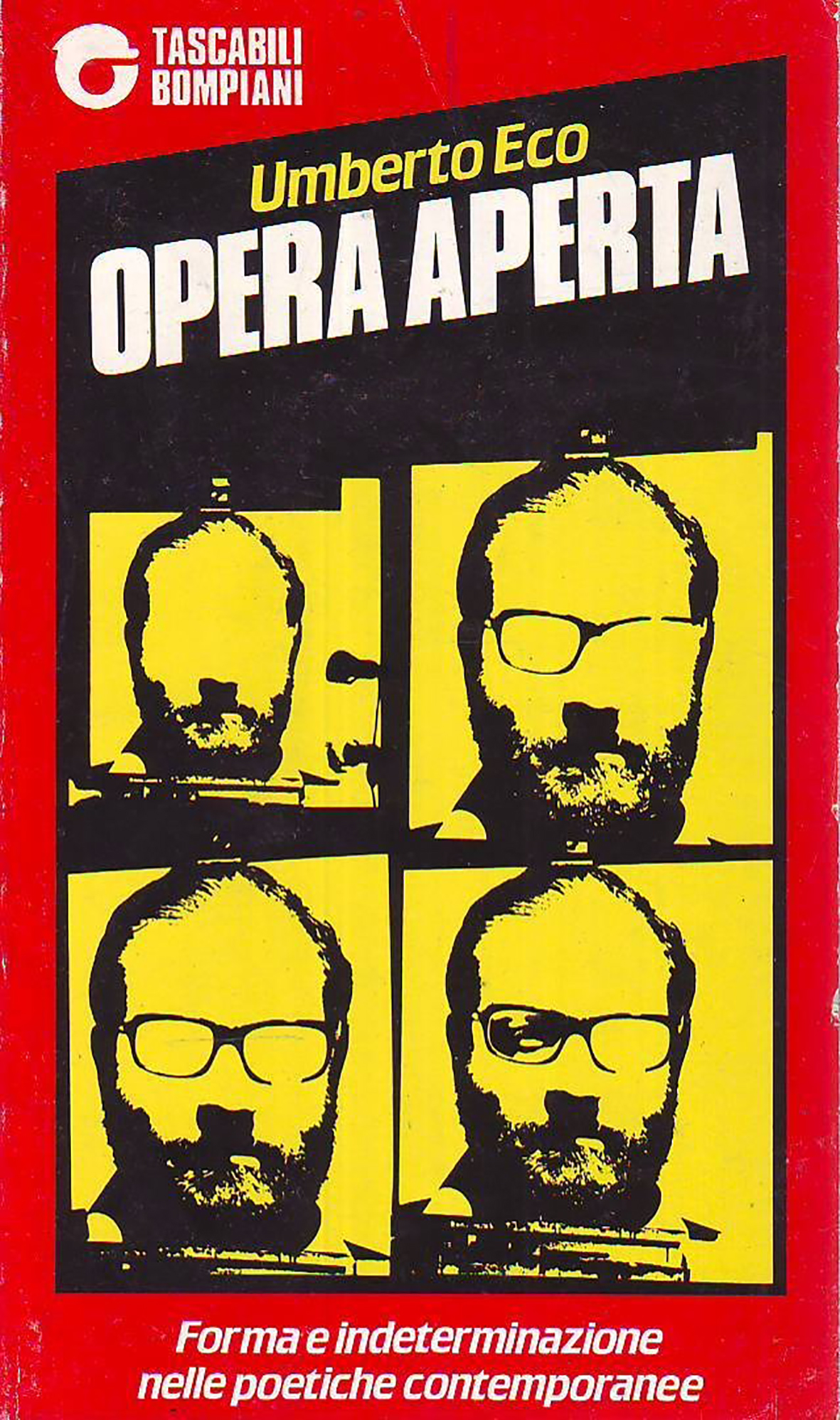
Inasmuch as we perceive the world exclusively through forms, he says, we require “perceptive tools” appropriate to the human condition in order to properly apprehend it—ideally with a view to improving it. Consciously or not, all aesthetic work provides these tools, so all those working with form are in some measure responsible for the way in which we comprehend the world.
In Eco’s view, the “socially committed” artist works to develop forms that are appropriate to, which is to say congruent with, the contemporary condition. This is the perpetual vocation of the avant-garde
(a term that Eco uses without hesitation, though it is clearly passé today): grappling with outmoded, impotent forms in the push for newly potent ones. This approach is less concerned with representing or expressing already-held impulses and ideas, more with seeking new ones.
At the heart of The Open Work, Eco proclaims: “Form must not be a vehicle for thought, it must be a way of thinking.”
Now, if in their most general senses “form” means a lasting encounter between atoms that hold good together,[2] and “thinking” the process of relating two or more discrete ideas in order to yield new ones, then “form as a way of thinking” in its most skeletal and pedantic sense describes the process of manipulating sensory matter—whether verbal or graphic—by juxtaposing, connecting, or configuring already existing ideas with a view to generating new ones. It is a fundamentally constructive, progressive process.
Eco’s thinking remains entirely plausible 50 years on, and it is a springboard for the present work.
The aim is to explain and elaborate the mechanics and dynamics of forming-as-a-way-of-thinking—ultimately in order to draw out an implicit relationship between aesthetics and ethics, and with particular reference to work being made in the grey zone between art and graphic design today. Although I refer to many instances of my own and others’ work, I want to articulate means not ends. Following Eco, the work I have in mind usually involves setting up conditions for work to play out in situ, in view of indirectly registering rather than directly commenting on the contemporary condition. It’s a working ethos that consists in how something is made as much as what; that practises in lieu of preaching, and is all the more convincing for doing so.
I’ll make my case by zigzagging between parallel chapters of so-called theory and practice.
The “theory” chapters comprise free-ranging essays that elaborate my own ideas extending from Eco’s work. They draw on related insights from as many close colleagues as seminal thinkers,[3] along with examples of art and artefacts past and present. The first comprises an overview of The Open Work, summarizing those aspects most relevant to my thinking, fleshing out Eco’s idea of what makes for properly “authentic” art, and suggesting why I think forming-as-a-way-of-thinking inevitably results in symbiotic form and content. I then describe how a certain strain of artistic self-reflexivity can be seen to model this approach.
Next I elaborate the nature of “work in movement,” whereby a series of conditions are set up for a project to “play out” and register contingencies met along the way. Constituent of this idea is that aesthetic impulses have a life of their own to be pursued with more or less fidelity to the fundamental “DNA” of an idea, and that such work can usefully incorporate the story of its own making. Contrary to a commonplace, recondite sort of contemporary art that leans on the crutch of supporting material, this breed of work is positively didactic to the extent that it “captions itself.” I’m after a working embodiment of “decency” and “good manners,” a set of working principles that seeks rather than shuts down relations. I propose that a borderline art/design disposition is peculiarly suited to this ethos, and that the confluence of fine art and graphic design is currently a productive place for it to play out, trailing work that ideally embodies, cultivates, and so perpetuates it.
Embedded within these chapters are a number of talks, letters and interviews that I’ve delivered, written and conducted since starting this thesis in 2010. These set pieces—a transcription of a talk, or a letter to a friend, for instance—are left more or less intact in view of embodying two key points: that forms can usefully carry the trace of circumstances; and that the form of the writing can communicate as much as the writing itself.
Between these “theory” chapters, the “practice” ones comprise case studies of realworld projects produced under the umbrellas of Dot Dot Dot, a left-field arts journal I co-founded and -edited between 2000–10, and Dexter Sinister, the working name of myself and David Reinfurt since 2006; and so they amount to about a decade-and-a-half’s worth of thinking-by-doing. Like their theory counterparts, these accounts incorporate autonomous bits and pieces of writing produced at the time, transmitted from the middle of the project in question. Given that one of the crucial ideas here is the graphic and material realization of writing as part and parcel of the project, these excerpts are reproduced as close to their original form as is possible within this new container.[4] Inevitably, many of the ideas recounted in theory recur in practice, and vice versa. Generally speaking, I have not made any attempt to iron out such repetitions, as they are endemic to the whole process.
This all amounts to an argument for—and embodiment of—a self-generating praxis: a pertinent way of looking informs a pertinent way of working, which in turn informs a pertinent way of looking, etc.
...
The chapters alternate as follows – theory on white paper, practice on light grey.
1. FORM AS A WAY OF THINKING: As stated, this first theory chapter is an overview of The Open Work—a distillation of Eco’s key ideas and an expansion of those most pertinent to my thinking. I focus particularly on his account of what makes for “authentic” (= exemplary) art in any era, and reinforce it with a few commensurate concepts, inlcuding T.W. Adorno’s explication of “essay,” Walter Benjamin’s “political tendency,” and Alain Badiou’s “fidelity to an event.” Eco notes that Open Works prioritize production over representation or expression as art’s essential “forming action,” an elaboration of his mentor Luigi Pareyson’s aesthetic philosophy. For them, “form” is synonymous with “organism,” and art duly conceived as an organic process governed by autonomous laws in which each new case (piece of work, situation) generates its own “forming logic.” Forming-as-thinking therefore implies the inevitable symbiosis of form and content. I close with some similarly “anti-dualistic” thinking from other fields.
2. DOT DOT DOT: Over ten years and 20 issues, Dot Dot Dot moved from being patently concerned with graphic design to something far more heterogeneous, sprawling across the humanities. At the same time it became increasingly “performative” in the sense that contributions began to actively demonstrate as much as passively articulate a subject. This tendency extended to the manner in which entire issues were produced; #15, for instance, was made entirely on-site over three weeks from the middle of a group show in Geneva, with the setup deliberately designed to leave some very visible marks on the product. All the ideas in this dissertation were incubated in the journal, to the extent that the present work effectively begins where the final issue (#20) left off. As such, the first half of this initial “practice” chapter recounts the journal’s ten-year trajectory as a practical preface, via a number of “surrogate editorials” published in that final issue. The last and longest of these tells the story of a parallel action, the continuing collection and exhibition of diverse “source material” (a polaroid, an oil painting, a Ouija board, etc.—each of which originally illustrated an essay in the journal). The chapter ends by explaining what happened next: a change of scenery called The Serving Library.
3. SELF-REFLEXIVITY AS A MODEL: “Self-reflexive” implies an automatic act of reflection on the matter at hand—like this sentence. In terms of art, it usually involves a given work “bending back on itself” in order to draw attention to some degree of artifice, typically manifest by rendering a work’s structure on a level with its subject matter; its form or style as apparent as its content or substance. Take a classic recursive text like This statement is a lie, or an image like a Mise en abyme: both set in motion a mental pendulum that induces intellectual vertigo. The work I have in mind likewise performs this oscillation of form and content to the degree that they are essentially one and the same, part and parcel. This is the sense in which self-reflexive work “models” the symbiosis constituent of forming-as-a-way-of-thinking: it exemplifies and so propagates it. I argue that the most convincing cases are less the consequence of disinterested deployment of self-reflexive tropes, which are usually ironic, contrived and tired, but rather derive from a self-critical temperament, which is essentially earnest, constructive and so perpetually valid. I don’t mean to make a case for self-reflexive work per se, only for working self-reflexively.
4. VARIOUS TRUE MIRRORS: “True Mirror” is the trade name of a mirror specifically engineered to reflect reality without inverting the image on the horizontal axis like most mirrors do. It shows us how we appear to other people rather than the left/right switch we’ve come to take for granted. (This makes for an unpleasant experience that sets off a vain process of frantic self-adjustment.) We adopted the True Mirror as an emblem for a project at the 2008 Whitney Biennial that involved producing around 40 nominal “Press Releases” in collaboration with a bunch of artists and writers who were invited to broadly reflect on the show. Each gnomic release was edited, designed and published by David and myself (as Dexter Sinister) in pronounced real-time over a concentrated three weeks, working from a hidden room in one of the Biennial’s auxiliary locations. Although never sanctioned by the Whitney, these releases circulated under its auspices in view of injecting noise—a bit of productive slowness and confusion—into its usual PR channels. The diverse results included a rumour, a fax, a composition for cello and office machinery, and an unusually vocal elevator operator. Typically, the project was carried on via further iterations, most prominently a “cubist variety show” based on a compact microfiche that re-channelled all the Press Releases made during those initial three weeks.
5. WORK IN MOVEMENT: Back in 1936, Walter Benjamin urged artists to actively involve themselves in root-level production processes (e.g., printing, publishing, distributing) in order to circumvent the domesticating effects of conventional ways of doing things. In his view, every artistic tendency carries a political equivalent. Here I more fully articulate an approach that involves establishing a set of fundamental conditions or instructions for a work to “play out”: a program that runs a script. Eco frequently uses the term “work in movement” alongside “open work,” and my summary understanding of the distinction is that where the latter cultivates multiple interpretations or ambiguous meanings, the former involves some kind of live, realtime aspect to convey a tangible sense of working from inside a flow of events. This is particularly apparent over a long period of time, when a single piece of work gets reworked, adapted or updated; or equally when entire bodies of work become increasingly re- and defined over an oeuvre. Along the way, I consider some discourse surrounding a recent group exhibition that offers some useful insight on the nature, difficulty and point of “thinking contingency”—the tenuous, uncertain, and surprising—in art and philosophy today. I suggest that any contemporary work which abides Eco’s sense of authenticity is similarly compelled to refract the sense of ‘radical contingency’ that dominates our contemporary condition.
6. BLACK WHISKY AND THE FIRST/LAST NEWSPAPER: Both these projects involved virtually extinct and so particularly telling production processes. In the case of the whisky: distillation and letterpress; in the case of the newspaper: “WYSIWYM” typesetting and “Paste-up” layout. This chapter tracks the ways in which these techniques influenced a number of written and visual forms. Black Whisky is the name of a co-operatively-funded 12-year malt distilled together with ex-publisher Christoph Keller in 2011. The idea was—or became—an excuse to meditate on the similarities and differences between publishing and distilling; to think through the benefits of “slowness” relative to both; to explore communal production by assembling a cooperative share system; and naturally to make a plausible scotch along the way. While Keller oversaw the product, we “framed” it by making a single piece of work with a three-fold purpose: to advertise, certify and label the eventual product. Meanwhile, The First/Last Newspaper was made from a space facing the New York Times offices in midtown Manhattan. Over three weeks, we produced six editions of a double-sided broadsheet under the auspices of the city’s 2010 Performa festival of performance art, designed to reflect on the seismic shifts in news industry at a time when online competition was forcing many long-established newspapers to fold. We gathered a number of writers to report from the middle of this paradigm shift. As none of them were otherwise directly employed by the news industry, they offered an unusually disinterested vantage on the situation.
7. ARTICULATE OBJECTS: Ideally the outcome of that work in movement, by “articulate object” I mean work that “speaks for itself,” that is legible and autonomous in the sense that it doesn’t rely on the crutch of supporting texts or other supplementary material, but is “self-captioning.” Ideally, it teaches a reader how to read it. Consider, for instance, the line left by a pen hooked up to trace the tremor of an earthquake. This is partly an argument for the sort of work that offers the key to unlock the story of its construction, the work’s “genes” carried in the traces of technical processes (which might productively expose virtual products’ relation to digital code as much as material products’ relation to mechanical machinery). I then consider the ethics inherent in this ethos—the aforementioned “decency” and “good manners,” two terms lifted from the sardonic yet earnest work of the Polish polymath Stefan Themerson, who was well aware of how pious they sounded, and intending to provoke. Building on his ideas in particular, I consider how the various qualities of openness, self-reflection, momentum, and clarity related in the previous chapters amount to a kind of aesthetic decorum, and so too an ethical orientation analogous to Eco’s “social commitment.” The overarching interest in the confluence of aesthetics and ethics here is rooted in a particular conception of “the modern movement” acquired by osmosis while an undergraduate at The University of Reading’s Department of Typography & Graphic Communication, literally a stone’s throw from Fine Art. In recuperating this largely lapsed term, “the modern movement,” I mean to emphasize a specific set of attitudes essentially distinct from customary conceptions of modernism. There’s a rhetorical shortcut to all this: I want to isolate the “movement” from the “modern” and run with it.
8. META-THE-DIFFERENCE-BETWEEN-THE-TWO-FONTS AND “IDENTITY”: Next up are two projects that explore subjects native to graphic design using digital media. In 1979, the computer scientist Donald Knuth wrote a piece of software called Metafont, that was designed to harness the essential “intelligence” of letterforms in view of generating an infinite supply of fonts using a limited set of parameters. In 2009 we picked up where he left off in the mid-1980s, updating the idea to run on contemporary computers. We were less interested in making a tool to produce endless new fonts, and more in thinking about and around the idea of Metafont. We developed the software for use in a number of practical circumstances (exhibition signage, publications) and wrote a pair of accompanying essays set in the font whose story is told in the text. Both essays have been published on numerous pages and walls, each time revised according to the new context. They have also found form in digital media, most recently an animation-of-sorts called Letter & Spirit, and an identity for an art foundation, both of which involve a new parameter, Time—and so too a further promiscuous essay. This is followed by a parallel project called “Identity”, a three-screen “projection” we developed in 2011 that charts the emergence and proliferation of graphic identities since the turn of the 20th century. It’s a mongrel cartoon-informational-film-essay that animates the typically fraught relationship between cultural and corporate spheres as contemporary art spaces become increasingly preoccupied with their own image. Three case studies are taken as coordinates from which to plot a broader landscape: the Centre Pompidou, MoMA, and the Tate. The projection’s voiceover script was assembled almost entirely from existing texts, quoted and paraphrased way out of context. It’s the most extreme instance of a working method that’s cropped up to lesser degrees in the other projects recounted here: a particularly open-sourced kind of writing.
9. GREY AREA: Finally, I articulate more clearly how the practical projects recounted here embody the theory chapters’ chain-link of ideas. To recap: I’m after a temperamentally self-reflexive way of working … that involves setting up the conditions for projects to play out in practice … ideally depositing articulate objects that speak for themselves … which amounts to an essentially humanist ethos commensurate with Eco’s sense of “social commitment.” Where once clearer channels for a socially-oriented design seem blocked, if not totally eradicated, the neighbouring domain of art is, for the time being at least, a space ambiguous and expansive enough to accommodate such orphaned interests. This displaced “speculative” design is clearly no longer a straightforward problem-solving activity, nor does it claim to be. Like all modern art, its products aren’t “useful” in any obvious sense, only in the offset, fuzzy manner in which aesthetic work can function as intellectual-utilitarian tools for thinking. This ethos is apparent in a certain strain of contemporary work I see as having evolved in response to the increasingly dumb—mute, obfuscating, hermetic, stand-offish, and ultimately alienating—art of recent decades. I suggest the way in which they perpetuate Eco’s 1962 sense of “authentic,” mirroring today’s vanguard concerns. To conclude, I consider why a borderline art/design disposition is well suited to this work, and why the ambiguous zone between fine art and graphic design is a fertile place for it to take root right now.
10. THE LAST SHoT CLOCK: The thesis closes on an actual work in progress at the time of writing. It begins with a conversation between David and myself in advance of an event on Summer Solstice 2014 at the Contemporary Art Centre in Vilnius, Lithuania. A year beforehand, we had participated in the joint Lithuania/Cyprus Pavilion at the 2013 Venice Biennial, which was staged in a sports hall under the reversible title Oo or oO. The show’s locus was a basketball court flanked by concrete bleachers, and we proposed to manipulate the two large scoreboards at both ends, retooling them into two identically esoteric, hexadecimal clocks. On our way to an inaugural Oo-oO party staged in the same venue and lit solely by our clocks, we were falsely informed that it had been shut down and so headed off elsewhere—only later to run into a couple of wasted Lithuanians who said we’d in fact just missed a memorable event. And so under the working title “The Last ShOt Clock,” our idea was to invoke the party we’d managed to miss by assembling a time-travelling incantation. We initially programmed the clocks with no particular purpose in mind, but in Lithuania they would finally be put to use—a use that, as we expected, was waiting to be realized all along. Ultimately, the clocks would become time machines, their logic used to structure a compilation of various ways and means of extracting oneself from the regular coordinates of time and space. The whole thing effectively happened backwards, synthesizing all the qualities variously inventorized in these chapters into a single summons.
I recently came across an interview with the Danish critic and curator Lars Bang Larsen.[5] In response to a closing query, “Are you an idealist?,” he replied: “The question remains, how to combine idealism with the scepticism and self-reflection that turns it into an artistic tool rather than an end in itself?” Answering the question by issuing a further question (and a pointedly productive one at that) seems to me an exemplary response. The key parts of the present skeleton can be slotted into the structure of Larsen’s anti-answer: the “idealism” of the modern movement, the “scepticism” against the dualistic thinking of form and content, the “self-reflection” of self-reflexivity. Moreover, Eco’s still-urgent imperative—that form must be a way of thinking—is latent in Larsen’s call for a ‘tool’ rather than more commodities. In which case, the text that follows will ideally serve as a kind of all-purpose wrench; or perhaps a tuning fork, as we shall see.
*
Notes:
1. Umberto Eco, The Open Work [1962, Italian] (Cambridge MA: Harvard, 1989).
2. This line paraphrases the following: “what do we mean by form? (a lasting encounter between atoms, joined together): they turn out to be lasting from the moment when their components form a whole whose sense ‘holds good’ at the moment of their birth, stirring up new ‘possibilities of life’ on a coherent level, in order to create a relationship to the world.” Nicolas Bourriaud, Relational Aesthetics [1998, French] (Paris: Les Presses du réel, 2002), 19.
3. These two types are clearly distinguished in the thesis. Following the initial mention of a full name, I continue to refer to “close colleagues” (which is usually also to say close friends) by forename and “seminal thinkers” by surname. This may seem overly casual, but it feels right—simply because most of the ideas here have developed in sustained dialogue with the many people who’ve contributed to the two journals I’ve co-edited. That’s to say, the lack of ordinary academic distance and disinterest seems worth acknowledging and replicating here inasmuch as it seems integral to the work.
4. – at least in terms of local formatting (meaning how the work was typeset and configured) if not actual format (meaning the original material, size, and surround). Although the text in between all the recycled matter in these practice chapters essentially tries to recuperate information lost to the original contexts, ideally of course the whole thing is made new in the process.
5. Lars Bang Larsen, “Art is Norm,” Internationistisk Ideale, no. 3 (2010): 13.